Portals, Gates and the Abyss: What the Bible Says About Other Realms

The short answer
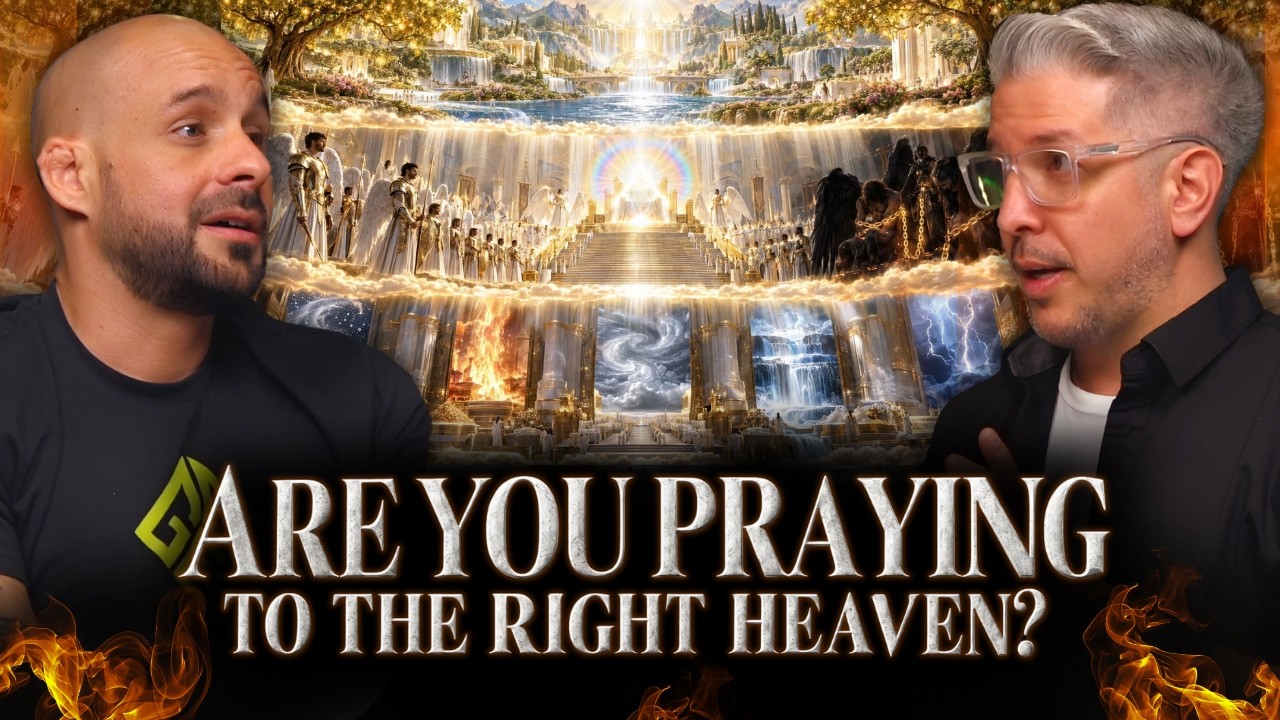
Scripture does not describe one flat world with a vague heaven above it. It describes realms — heaven, earth, and the deep beneath — and it describes doorways between them. Jacob woke from a dream and called a patch of ground the gate of heaven. Yeshua spoke of the gates of Hades, and he said it standing in the one place in Israel that everyone around him already considered a doorway to the underworld. Peter says Messiah went and preached to spirits held in prison. None of that is fringe material. It is in the text, and most of us were simply never taught it.
A note on how we handle this subject. This conversation with researcher Gary Wayne ranges widely, including into claims about named public figures and organisations that we cannot verify. We don't publish those. What follows is the part that stands on Scripture and documented history, with anything speculative clearly labelled. If that disappoints anyone hoping for names, good — accusation is not discernment.
Three realms, not two
Paul writes that at the name of Yeshua every knee will bow, "of those in heaven, those on earth, and those under the earth" (Philippians 2:10). Three categories, listed as though the readers already knew them.
The Bible is consistent about this third place. Peter says God cast rebellious angels into Tartarus, reserved in chains for judgment (2 Peter 2:4). Jude says the same — kept in everlasting bonds under darkness until the great day (Jude 6). Revelation describes the pit of the abyss as something with a key, opened once and sealed again (Revelation 9:1–2; 20:1–3).
A key and a chain imply a door. That is the thread worth following.
Jacob's gate of heaven
Genesis 28 is the clearest one and it hides in plain sight. Jacob sleeps on a stone and sees a ladder set up on the earth with its top reaching heaven, and angels ascending and descending on it. He wakes and says: "How awesome is this place! This is none other than God's house, and this is the gate of heaven."
Two things to notice. He calls it a gate — a specific location, not a metaphor for prayer. And the traffic is two-way: angels going up and coming down. Then he names the place Bethel, house of God, and sets up the stone as a pillar. He treated it as a real site.
And Yeshua picks the image up himself in John 1:51: "You will see the heavens opened, and the angels of God ascending and descending on the Son of Man." He is saying the doorway is now a person.
The gates of Hades — and where he said it
"On this rock I will build my assembly, and the gates of Hades will not prevail against it" (Matthew 16:18). Most of us heard that in a building far from where it was spoken. The geography is the sermon.
Matthew 16 opens by telling us where they were: the region of Caesarea Philippi, at the southern foot of Mount Hermon. And that site is not neutral ground. It held a great cave and spring at the base of a cliff, a centre of Pan worship, and the locals called that cave a gateway to the underworld. You can stand there today and look at it.
So when Yeshua says the gates of Hades will not prevail, he is standing in front of something everyone present regarded as one, pointing at it, and declaring that what he is building will outlast it. That is not a throwaway line. It is a challenge issued on the enemy's doorstep.
Why Mount Hermon keeps coming up
Hermon is the mountain of Bashan, and Bashan in Scripture is giant country. Deuteronomy 3 records Og king of Bashan as the last of the Rephaim, with his territory reaching to Hermon and his iron bedstead measured out for the record. Joshua 12 ties the same region to the same king.
Psalm 68 — the psalm Paul will later quote about leading captivity captive — names Bashan directly, asking why the many-peaked mountains look with envy at the mountain God chose to dwell on. There is a rivalry of mountains running through Scripture: the mountain of the north versus the mountain God picked.
And the ancient records outside Scripture put the same location at the centre. The Ugaritic texts describe the rephaim — the same word Scripture uses for the giant clans — crossing between this world and the realm their god ruled from. The book of Enoch names Hermon as the place where the watchers bound themselves by oath. Enoch is not Scripture; but the fact that a Jewish text from before the New Testament pins the rebellion to the very mountain where Yeshua announced the defeat of Hades is worth sitting with.
There is also a real archaeological site in the Golan below Hermon: Rujm el-Hiri, known in Hebrew as Gilgal Refaim — the wheel of the giants. Concentric stone circles, thousands of years old, purpose still debated. Structures of this kind, two uprights with a capstone across them, are called dolmens; the word itself is Breton for stone table, though archaeologists label one class of them portal tombs, which is where the portal language comes from. Worth knowing so you can use the term accurately.
He went through the door himself
Here is the passage that makes this more than curiosity. "He was put to death in the flesh, but made alive in the spirit, in which he also went and preached to the spirits in prison, who before were disobedient... in the days of Noah" (1 Peter 3:18–20).
Read what that says. Between the cross and the resurrection, Messiah went somewhere and made an announcement to spirits confined since Noah's generation. Not to save them — the word is proclaimed. He announced an outcome.
Paul fills in the shape of it. Ephesians 4:8–10 quotes Psalm 68: "When he ascended on high, he led captivity captive" — and adds that the one who ascended is the one who first descended into the lower parts. Colossians 2:15 gives the tone: "having stripped the principalities and the powers, he made a show of them openly, triumphing over them." That is the language of a Roman triumph, defeated enemies paraded through the streets.
So the gates were not merely spoken about. They were entered, and the announcement made inside them was that the rebellion is finished.
The sea, the deep, and what it stands for
Follow the water imagery and a pattern appears. Genesis 1:2 opens with darkness on the surface of the deep. Job devotes a chapter to Leviathan, a creature of the sea no man can master. The beast of Revelation 13 rises out of the sea. And when everything is made new, one detail is specified almost in passing: "the sea is no more" (Revelation 21:1).
In the ancient world the deep was chaos — the uncharted, the place things come out of. Scripture uses that association deliberately. Whether that has anything to say about modern reports of craft entering and leaving the ocean is not something the Bible settles, and we won't pretend otherwise. But the symbolic vocabulary is consistent, and it ends with the chaos abolished.
Counterfeit thrones and the all-seeing eye
One of the most useful ideas in this conversation is that the enemy has no originality. He copies.
Ezekiel 1 and 10 show cherubim bearing the throne of God, wheels within wheels, moving as one. Psalm 80 and Psalm 99 describe God as enthroned above the cherubim. That is the original. Every throne room built to overawe a nation, every emblem of winged guardians flanking a seat of power, is derivative of a real throne described in Scripture.
The same goes for the all-seeing eye. Before it was ever a symbol in anyone's iconography, Scripture said this: "the eyes of Yahweh run back and forth throughout the whole earth" (2 Chronicles 16:9). An eye claiming to see everything is a forgery of an attribute that belongs to God alone — and knowing that drains it of most of its menace.
Where the research goes past the text
Everything above can be checked. The episode also covers material that is reconstruction, and we pass it on labelled as such rather than as teaching:
That ancient megalithic sites were deliberately built on locations understood as doorways. Some were certainly built on older worship sites — that much is documented. The portal function is interpretation.
That the Tower of Babel involved technology of this kind. Genesis says the project was a tower "with its top in the sky" and that God judged the unity of language behind it. What exactly they were building is not stated.
That particular English translation choices smuggled in occult meanings. Translation debates are real and worth studying, but this specific argument is a minority claim; check any such case in an interlinear yourself before repeating it.
Claims about specific living people, governments, families or institutions. We are leaving these out entirely. Not because nothing is hidden — Scripture says plenty is — but because naming individuals without proof is bearing false witness, and that commandment has no exemption for prophecy teaching.
How to carry this without fear
Gary's closing word is the right one, and it cuts both ways: don't underestimate what people believe, because they act on it whether or not you find it credible. Ecclesiastes 1:9 says there is nothing new under the sun, and what was will be again.
But hold the whole picture. Every gate in this study has already been walked through by Messiah, and he came back out. The powers were stripped and paraded. The abyss has a key, and he holds it — "I am the first and the last, and the Living one. I became dead, and behold, I am alive forevermore. I have the keys of Death and of Hades" (Revelation 1:17–18).
So study this the way you would study enemy positions before a battle you already know the outcome of. Not with a thrill, not with dread. With sober attention, and with your armour on (Ephesians 6:11–12).
Frequently asked questions
Does the Bible talk about portals?
It uses the language of gates and openings between realms. Jacob calls a place "the gate of heaven" (Genesis 28:17), Yeshua speaks of "the gates of Hades" (Matthew 16:18), and the abyss is described as having a key (Revelation 9:1; 20:1).
Why is Mount Hermon significant in the Bible?
It is the mountain of Bashan, the region Scripture associates with Og and the Rephaim (Deuteronomy 3). Caesarea Philippi at its foot held a famous cave regarded as an entrance to the underworld — and that is where Yeshua said the gates of Hades would not prevail.
Where did Jesus go between the cross and the resurrection?
1 Peter 3:18–20 says he went and proclaimed to spirits in prison who were disobedient in the days of Noah. Ephesians 4:8–10 and Colossians 2:15 describe a descent, captives led out, and the powers openly disgraced.
What is Gilgal Refaim?
A real prehistoric site in the Golan Heights, also called Rujm el-Hiri, made of concentric stone circles. Its Hebrew name means "wheel of the giants." Its purpose is still debated by archaeologists.
Should believers be afraid of this subject?
No. Messiah holds the keys of Death and Hades (Revelation 1:18), and the powers have already been publicly defeated (Colossians 2:15). Study it soberly, with the armour of Ephesians 6 on, and leave the fear alone.
Does this ministry identify specific people as part of a conspiracy?
No. Scripture is clear that spiritual powers are real and that deception is organised, and equally clear about bearing false witness. We teach the pattern; we do not accuse individuals.
Keep studying
Take the next step
This is not material to study alone or unanchored. Join our free online Bible study community on WhatsApp — we work through the text together every day of the week, and people there will check you as gladly as they'll encourage you.


Comments