What Do the Fallen Angels Really Want? Gary Wayne on the War Behind the War

The short answer: According to researcher Gary Wayne, the fallen angels know they cannot win the war against God. Their goal is to prove a point: that humanity, given the choice, will rebel just as they did. If mankind can be corrupted or destroyed, they argue, God's creation has failed. Scripture shows that strategy collapsed at the cross and the empty tomb, and the same Messiah will finish it at His return.
The war behind the war
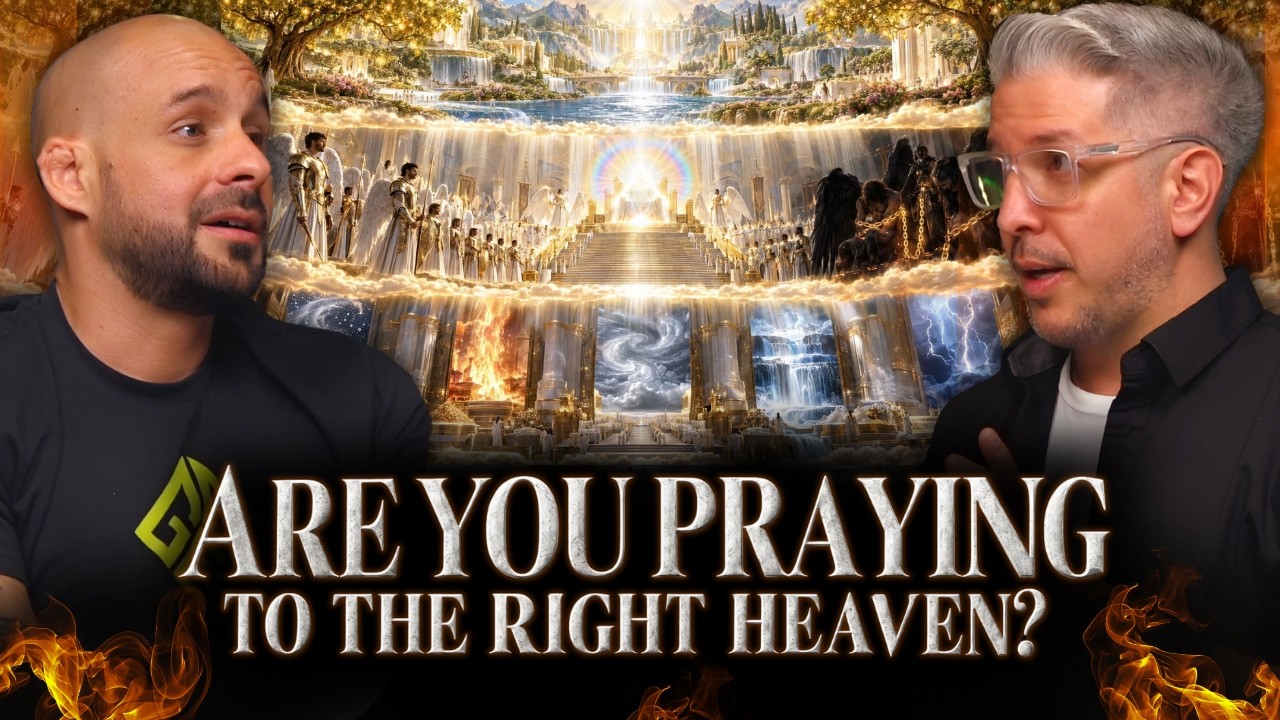
In this conversation, Pastor Chris sits down with Gary Wayne, author of The Genesis 6 Conspiracy, to ask a question most teaching on fallen angels never gets to: what are they actually after?
Gary's answer starts in Eden. Once Adam was created with a special commission, the rebel angels understood that humanity would somehow be part of the resolution of their rebellion. They did not know how. So they set out to make sure mankind never became what God intended.
They did not know the plan
Paul says it directly: none of the rulers of this age understood God's hidden wisdom, "for had they known, they wouldn't have crucified the Lord of glory" (1 Corinthians 2:8).
That verse is the key to the whole picture. The powers of darkness pushed for the crucifixion, thinking it was their victory. It was the very act that defeated them.
Plausible deniability: why they used offspring
Gary makes an observation worth sitting with. In Scripture we do not see the fallen angels openly blaspheming God. They work through others. In the days of Noah they produced offspring, the Nephilim, who filled the earth with violence (Genesis 6:4, 11). The violence came through the giants, not directly through the Watchers.
The goal, in Gary's words, was for humanity to destroy itself and become totally corrupted, so the rebels could argue: no matter what You create, God, it rebels against You. They are not trying to win the war. They are trying to win an argument, and with it a realm of their own outside God's law, the ambition Isaiah 14 describes when the morning star says, "I will make myself like the Most High."
The spectacle after the cross
Gary ties together several passages that are easy to read in isolation:
1 Peter 3:19 says Messiah went and proclaimed to the spirits in prison, connected in verse 20 to the days of Noah.
Colossians 2:15 says He disarmed the principalities and powers and made a public spectacle of them, triumphing over them.
Ephesians 4:8 says He led captivity captive, quoting Psalm 68:18.
Psalm 68 mentions the mountain of Bashan and the hill God desired to dwell in, the region of Mount Hermon, where 1 Enoch 6 places the Watchers' descent.
Read together, Gary argues, these describe a victory procession over the very beings who corrupted the world before the flood. And it is at the foot of Hermon, at Caesarea Philippi, that Yeshua declares the gates of Hades will not prevail against His church (Matthew 16:13–18).
Satan over a council of rebels
Satan, Gary explains, rules over the rebel angels in a counterfeit of God's own throne room, sitting above a council of gods. 1 Enoch 40 describes four presences around God's throne, named as Michael, Raphael, Gabriel and Phanuel, and gives one of them the charge of keeping the satans from coming before the Lord of Spirits to accuse those who dwell on the earth.
Jude 13 calls certain rebels "wandering stars, for whom the blackness of darkness has been reserved forever." Gary connects these to the planets the ancient world named after its gods, and through them to the days of the week, a reminder of how deeply the pantheon was woven into everyday life.
Talking idols and the image of the beast
Pastor Chris asked whether artificial intelligence and robotics could become bodies for disembodied spirits. Gary pointed to the teraphim, the household idols Rachel took from Laban in Genesis 31:19, which Laban pursued with remarkable urgency.
He also traces a cluster of related Hebrew words: rapha, "to heal," and the rephaim, a word used both for the giant clans and for the spirits of the dead. Gary sees the connection as deliberate. In ancient Ugaritic texts the Rephaim were noble, giant healers whose spirits passed into the underworld after death.
Whether or not you follow every link, Revelation 13:15 is plain: the false prophet is allowed to give breath to the image of the beast, so that it speaks. Some form of animated image is coming. Gary also notes that in computing, background processes that run unseen are called daemons, a term taken from the Greek daimon. Watch what technology is being built to do.
Do not get ahead of the timeline
Gary is careful here, and it is wise counsel. He believes we are likely in the fig tree generation (Matthew 24:32–34), but not yet in the final seven years. He names three things to watch for before then:
A universal Babylon religion, the system of Revelation 17.
A ten-king alliance of nations (Daniel 7:24; Revelation 17:12).
The temple conditions that allow sacrifice to begin, which the abomination of desolation will later interrupt (Daniel 9:27; Matthew 24:15).
We don't want to get ahead of ourselves, because if we lose our credibility, nobody will listen to us when they need us.
Let Yeshua define the prophets
On the rapture, Gary's rule is simple: place all prophecy around what Yeshua said, and interpret the prophets by Him rather than the other way around. In 1 Thessalonians 4:15 Paul says he speaks "by the word of the Lord," pointing back to the Olivet Discourse, where the Son of Man comes on the clouds and gathers His elect after the tribulation of those days (Mark 13:24–27).
Gary also distinguishes two kinds of tribulation using the Greek thlipsis: the pressure on the saints Yeshua described (Matthew 24:9; Revelation 7:14) and the great tribulation that follows the abomination (Mark 13:19). He points readers to the Didache, an early church manual, whose final chapter expects the world-deceiver to appear and the faithful to endure before the Lord comes.
His practical advice is worth repeating: pray for an early rescue, but prepare to stand. For a fuller treatment of the three rapture views, see our teaching on pre-trib, mid-trib and post-trib.
Two seeds until the end
Gary closed with Psalm 21:8–10, a picture of the day of the Lord's anger in which God destroys the enemies' offspring from the earth and their seed from among the children of men. The war that began with Genesis 3:15 runs to the end of the age.
But it ends the way it was always going to end. The rulers of this age did not understand the cross, and they did not see the resurrection coming. Every power that tried to erase humanity was disarmed by a Man who walked out of a tomb, and He has promised to raise everyone who belongs to Him.
Frequently asked questions
What is the end goal of the fallen angels?
Gary Wayne argues their aim is to corrupt or destroy humanity and so prove that God's creation inevitably rebels, winning an argument and a realm of their own rather than the war itself.
Did Satan know Jesus would rise from the dead?
According to 1 Corinthians 2:8, the rulers of this age did not understand God's hidden wisdom; if they had, they would not have crucified the Lord of glory.
Who are the spirits in prison in 1 Peter 3?
Peter connects them to the days of Noah. Many readers, including Gary, link them to the rebellion of Genesis 6 and the angels Jude and 2 Peter describe as kept in chains.
Are we in the tribulation now?
Gary believes we are likely in the fig tree generation, but that a universal religion, a ten-king alliance and temple sacrifice must come first.
Take the next step
If this stirred something in you, do not walk it out alone. Join our free online Bible study community on WhatsApp. We meet weekly to study the Word, ask hard questions, and grow together — Prophetic Bible Study on Wednesdays, Standard Bible Study on Mondays, and Women's Bible Study every other Tuesday.


Comments